Photos from Qatar _285
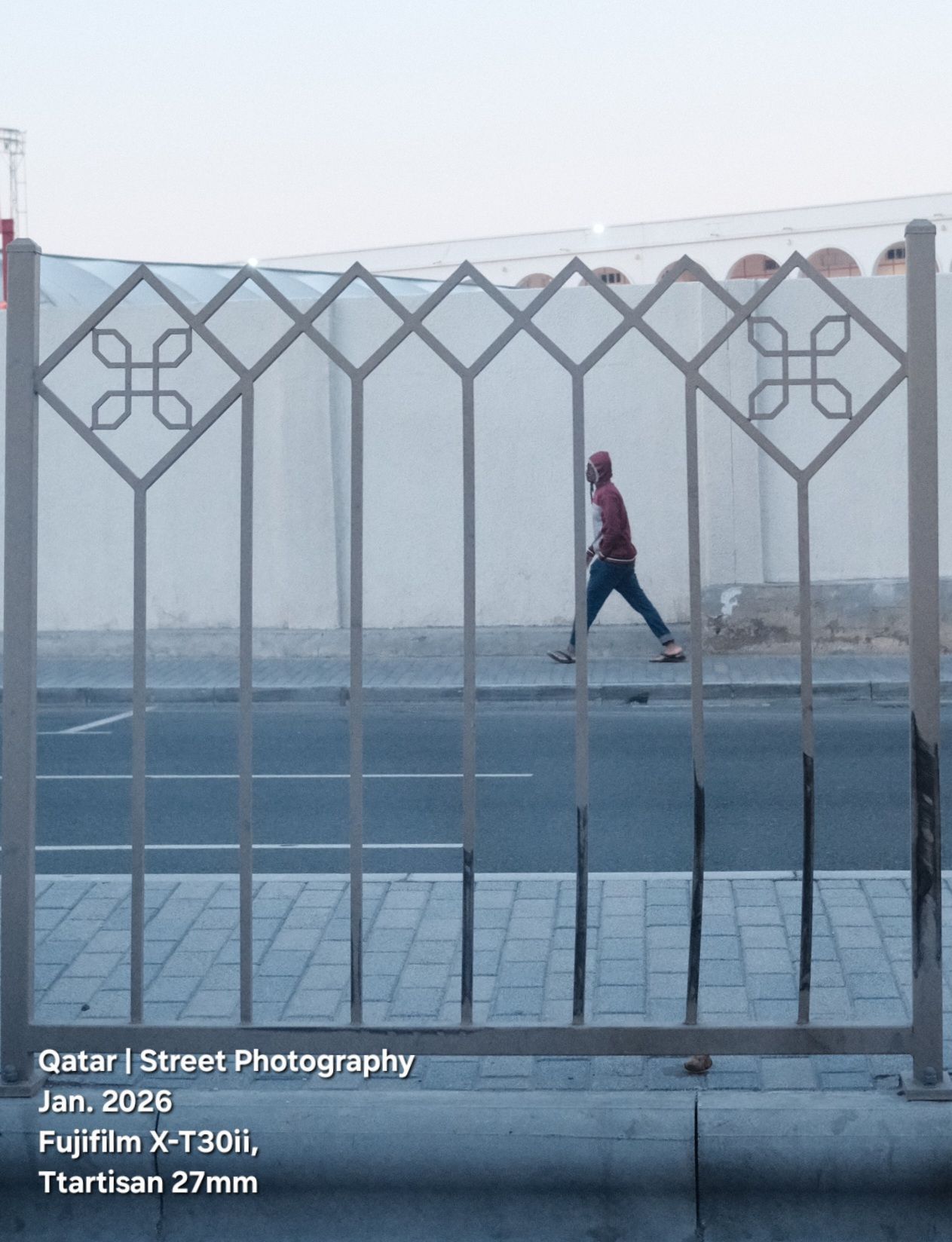
Qatar, street photography, using Fujifilm X-T30ii camera with Ttartisan 27mm f2.8 lens with Classic Neg Blue film simulations.
This fence is to prevent people from crossing the road, and they have to walk to zebra-line.
Photo taken in Manual mode ISO 3200, S.S. 1/250s, F/4.
Here are other photos taken with Classic Neg Blue film simulation.
Qatar, DohaPort _59
 Click to Enlarge
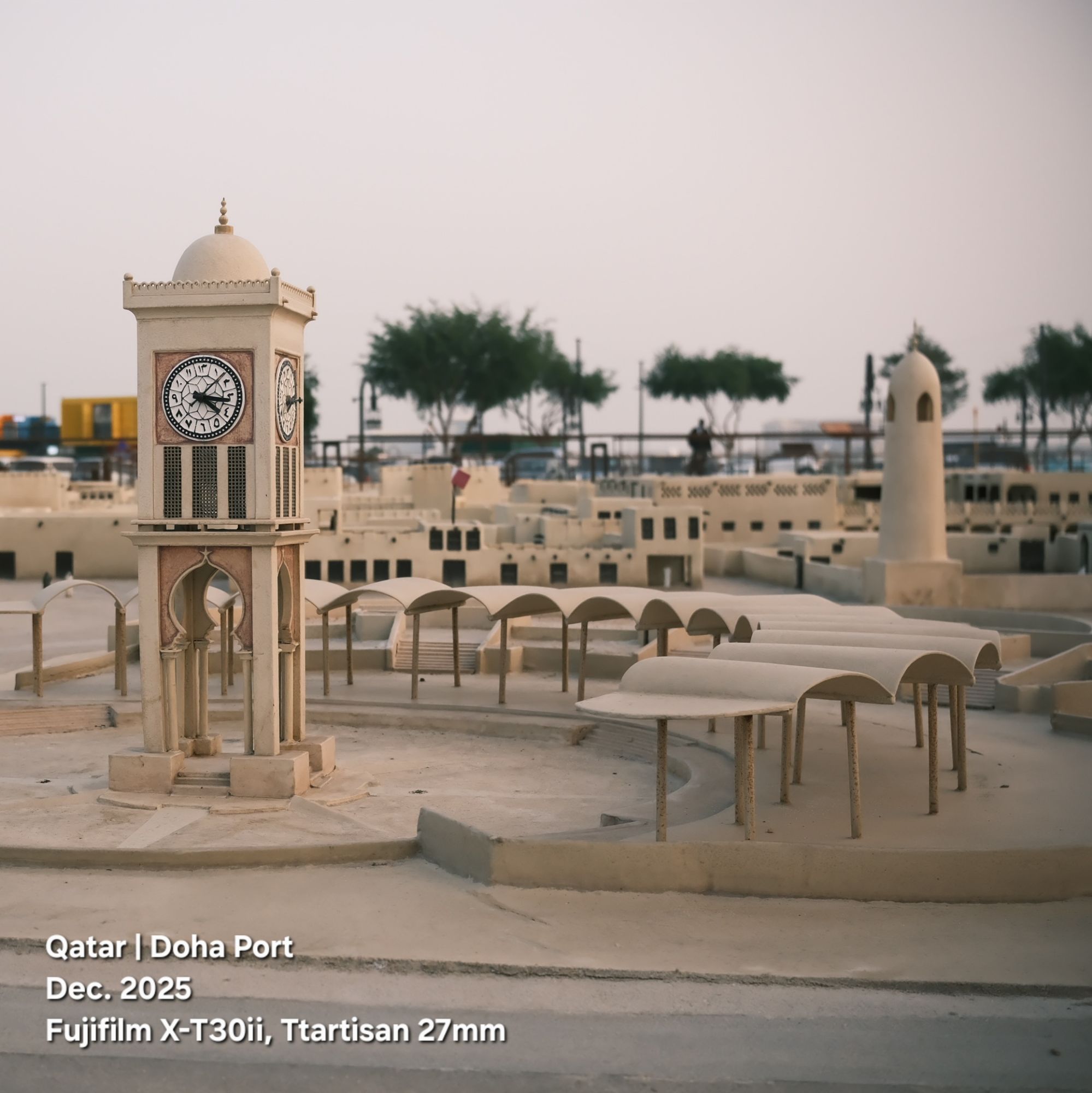
The Clock Tower in Qatar, this is a small scale of a famous building. Visitors can walk between these models in an interactive experience that showcases the beauty of Qatar, its landmarks, and its history.
Qatar, DohaPort _58
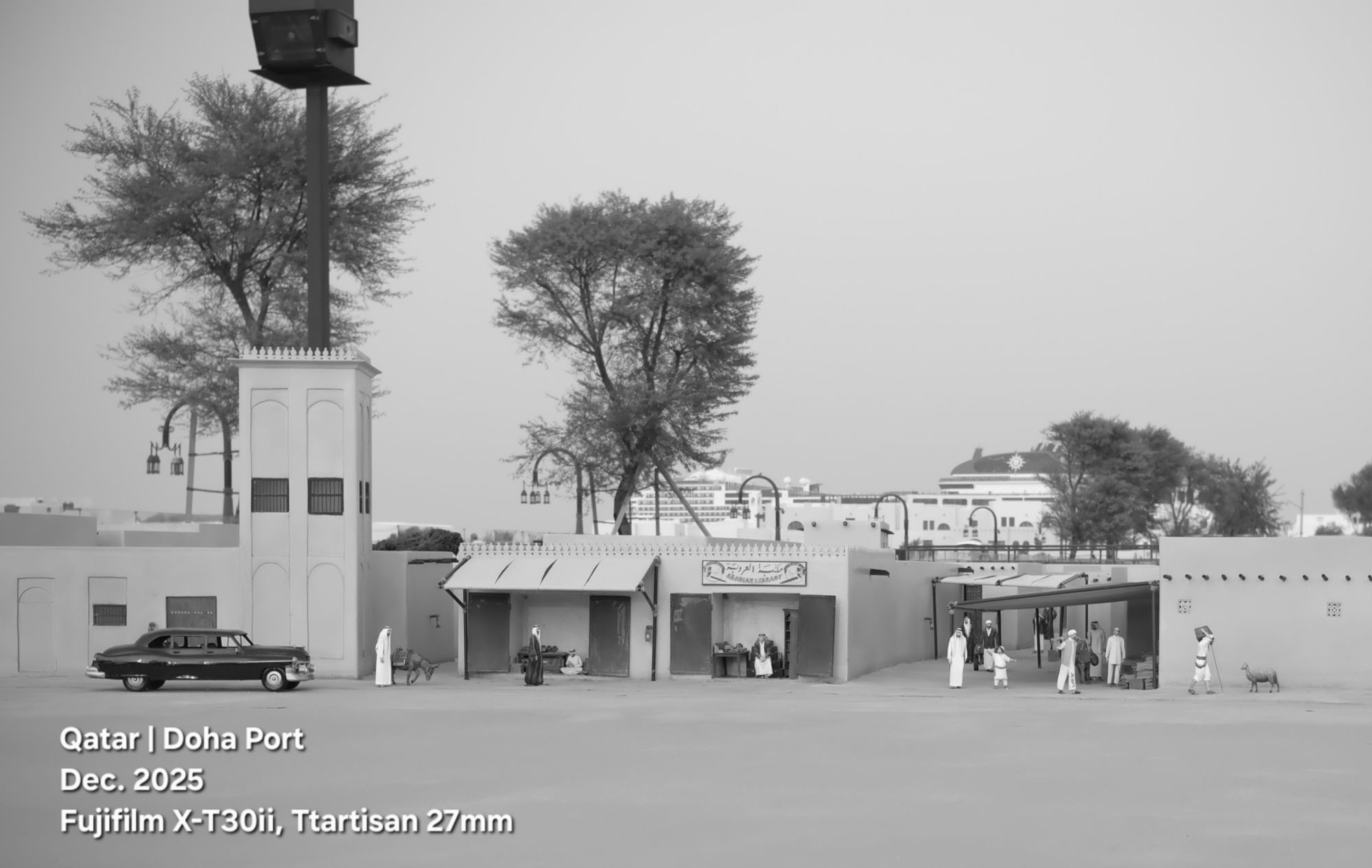
Camera on ground level, a photo of Miniature project walk-through experience of Qatar’s heritage through intricately crafted scale models, located in old DohaPort.
I take this image using Fujifilm X-T30ii and Ttartisan 27mm lens in black and white film simulation.
Photos from Qatar _286
 Click to Enlarge
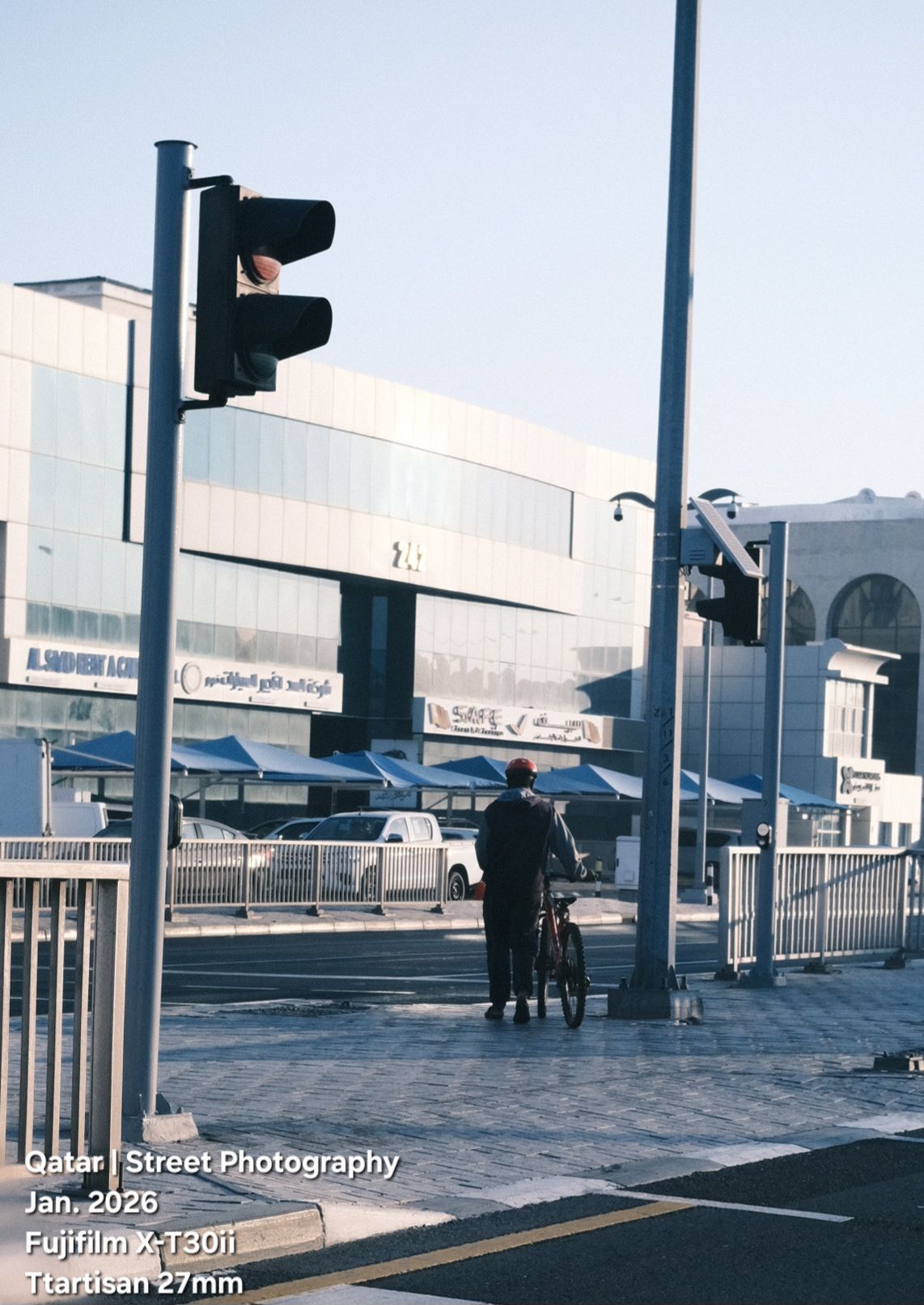
Two of the film simulations that will give you a very nice look in the morning are the classic Neg Blue and Classic Neg Peachy.
I take this photo using the Classic Neg Blue, with Fujifilm X-T30ii camera and Ttartisan 27mm lens.
You can find the recipe for the film simulations here on this page.
Photos from Qatar _284
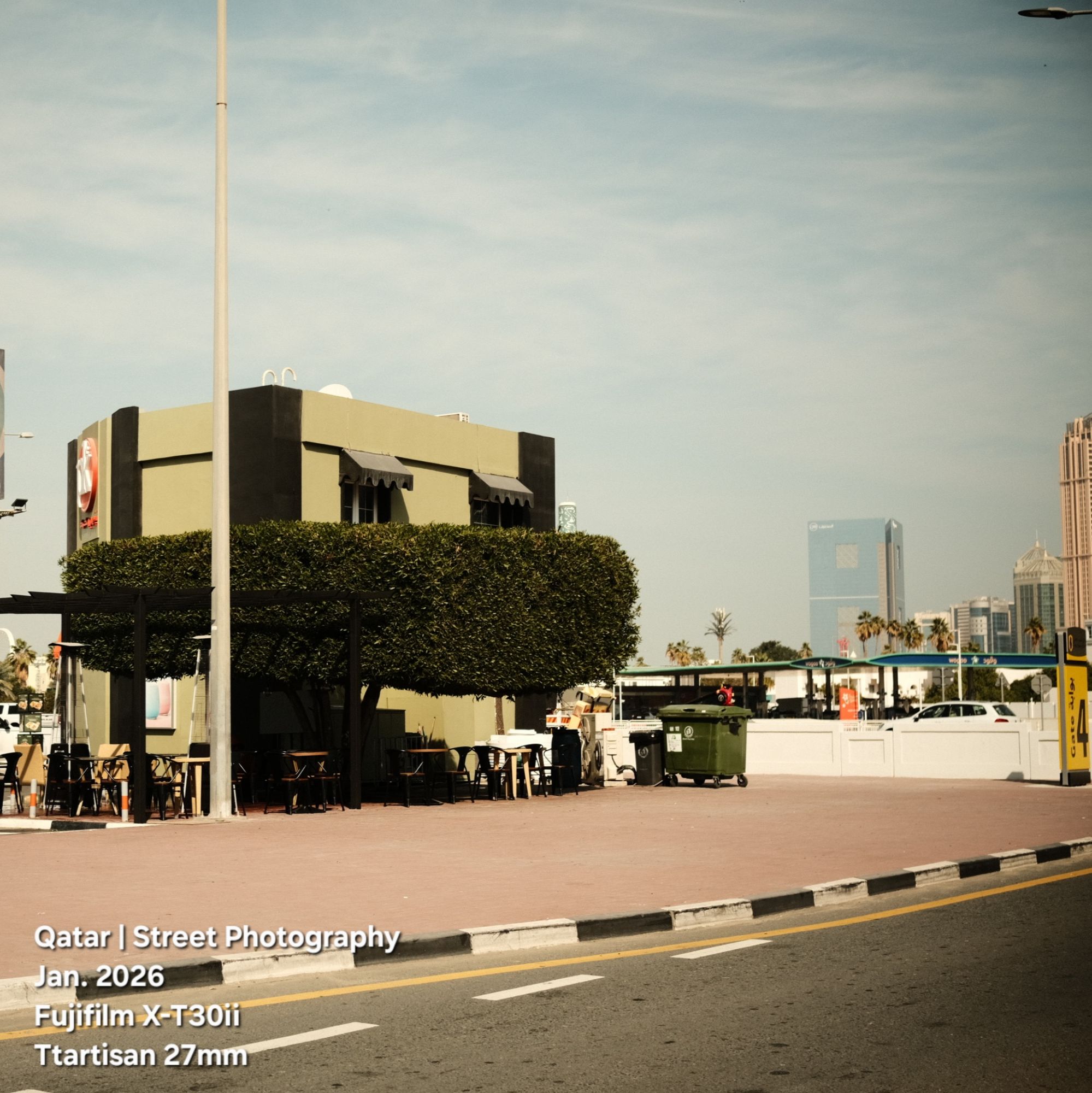
Some trees grow up here and been trem to be a big umbrella that makes a good and beautiful shadow for the restaurant visitors to sit on.
I take the shot using Fujifilm X-T30ii camera with Ttartisan 27mm lens in manual mode ISO 160 , S.S 1/1000s , F 3.2,
Qatar, DohaPort _57
 Click to Enlarge
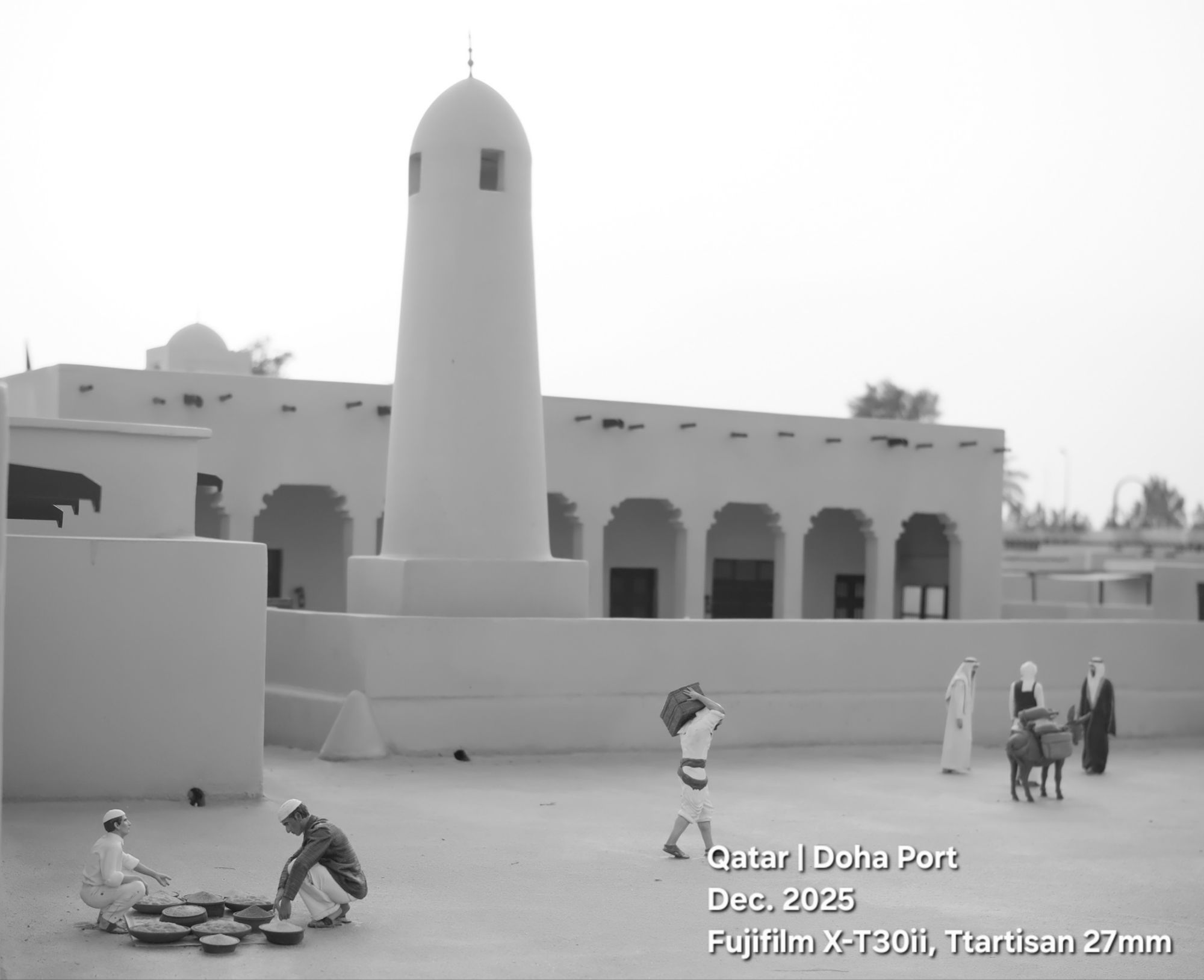
Almost all mosques in Qatar 🇶🇦 (we can say in Gulf Countries) between 20s & 70s are similar in shape and architecture, this small scale building is part of a whole city placed in the Old DohaPort for visitors to see the heritage through intricately crafted scale models.
Photo taken in ground level using Fujifilm X-T30ii camera with Ttartisan 27mm f2.8 lens in black and white film simulation.
Qatar, DohaPort _55
 Click to Enlarge
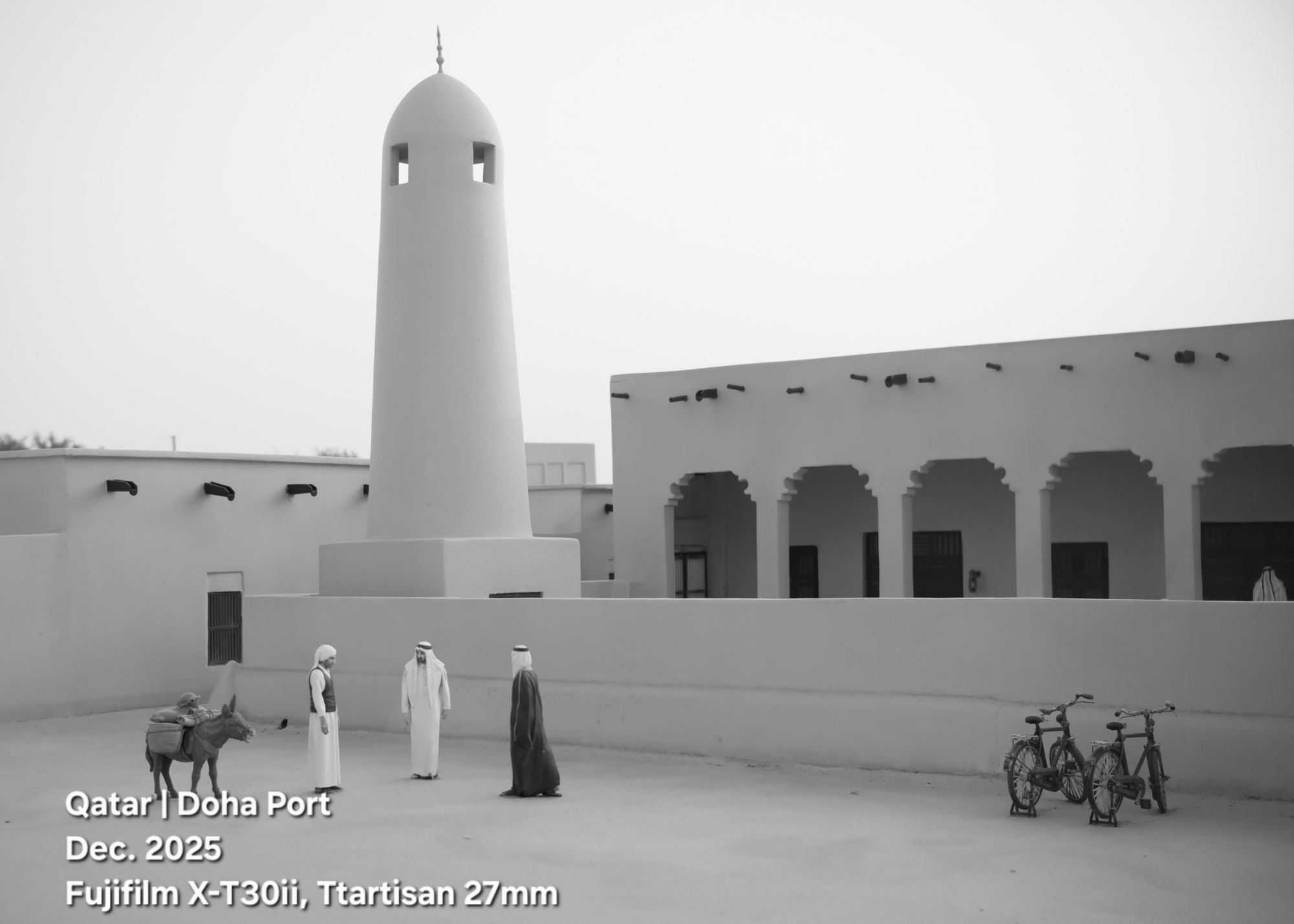
Small scale of the traditional mosque building in Qatar in the 60s and 70s. The building style, the windows, the door, and long corridors can be found in the houses at that period of time.
I take the shot at Old DohaPort, using Fujifilm X-T30ii camera with Ttartisan 27mm f2.8 lens in black and white.
Photos from Qatar _283
 Click to Enlarge
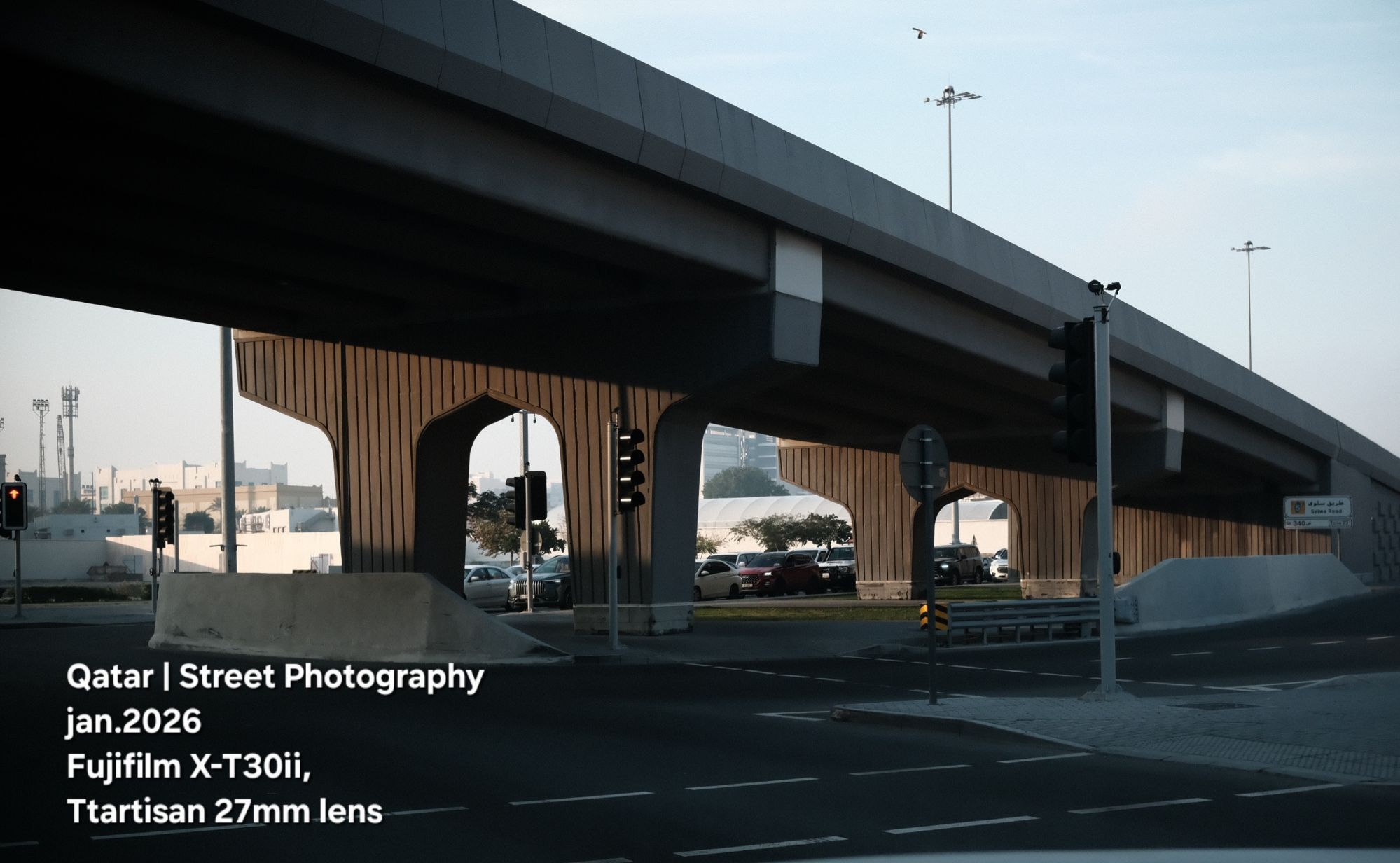
Waiting for the Green traffic lights, want to pass under this bridge, I notice the sun-lights and I take some photos. Here is one.
I take the shot with Classic Neg Peachy film simulation on the FujiFilm X-T30ii camera.
Photos from Qatar _282
 Click to Enlarge
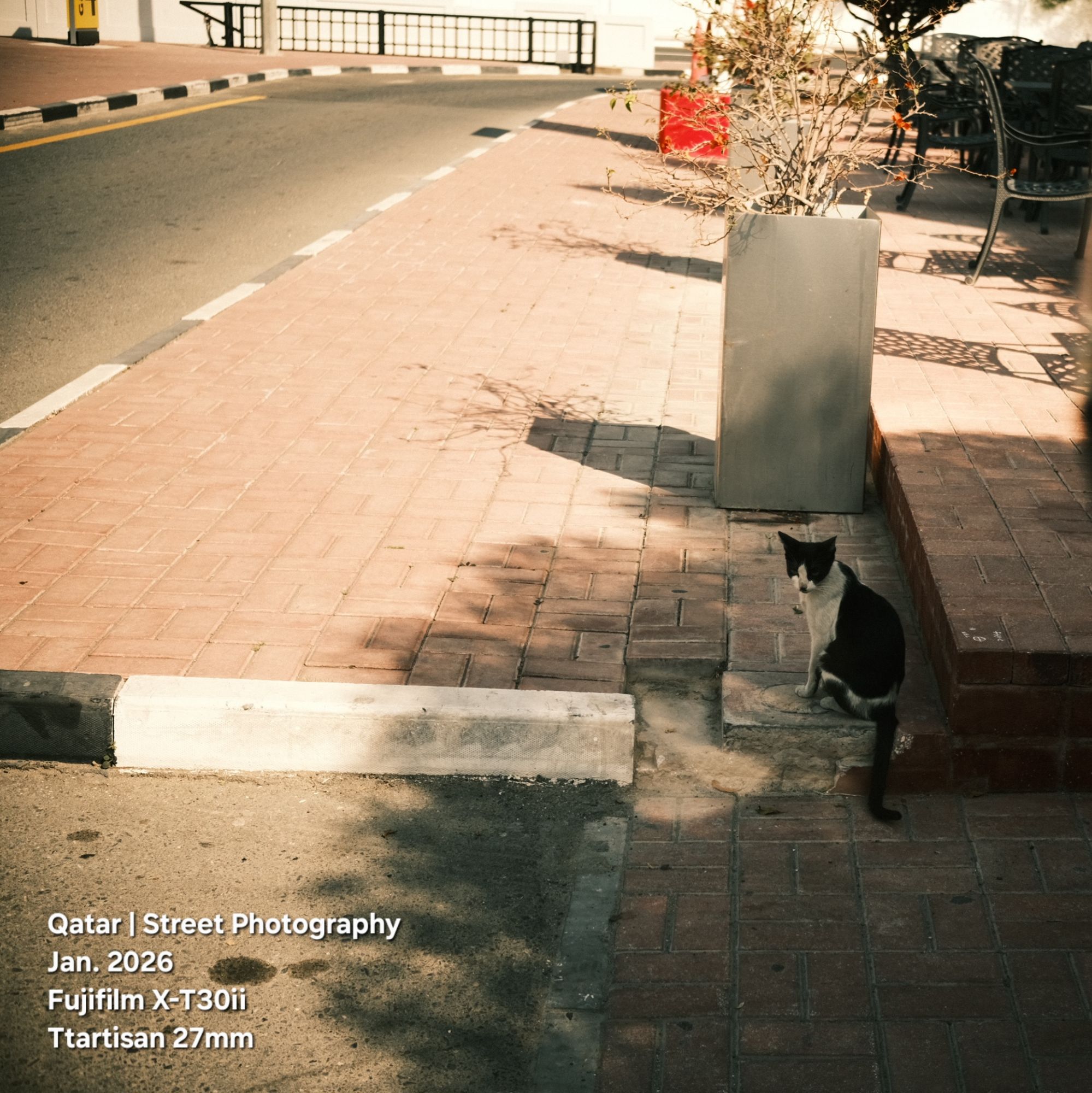
Waiting for my order next to ‘Applebee’s’, I saw this cat trying to find something to eat under the tables and chairs next to the restaurants.
I take the shot with Classic Neg Peachy film simulation on the FujiFilm X-T30ii camera.
Photos from Qatar _281
 Click to Enlarge
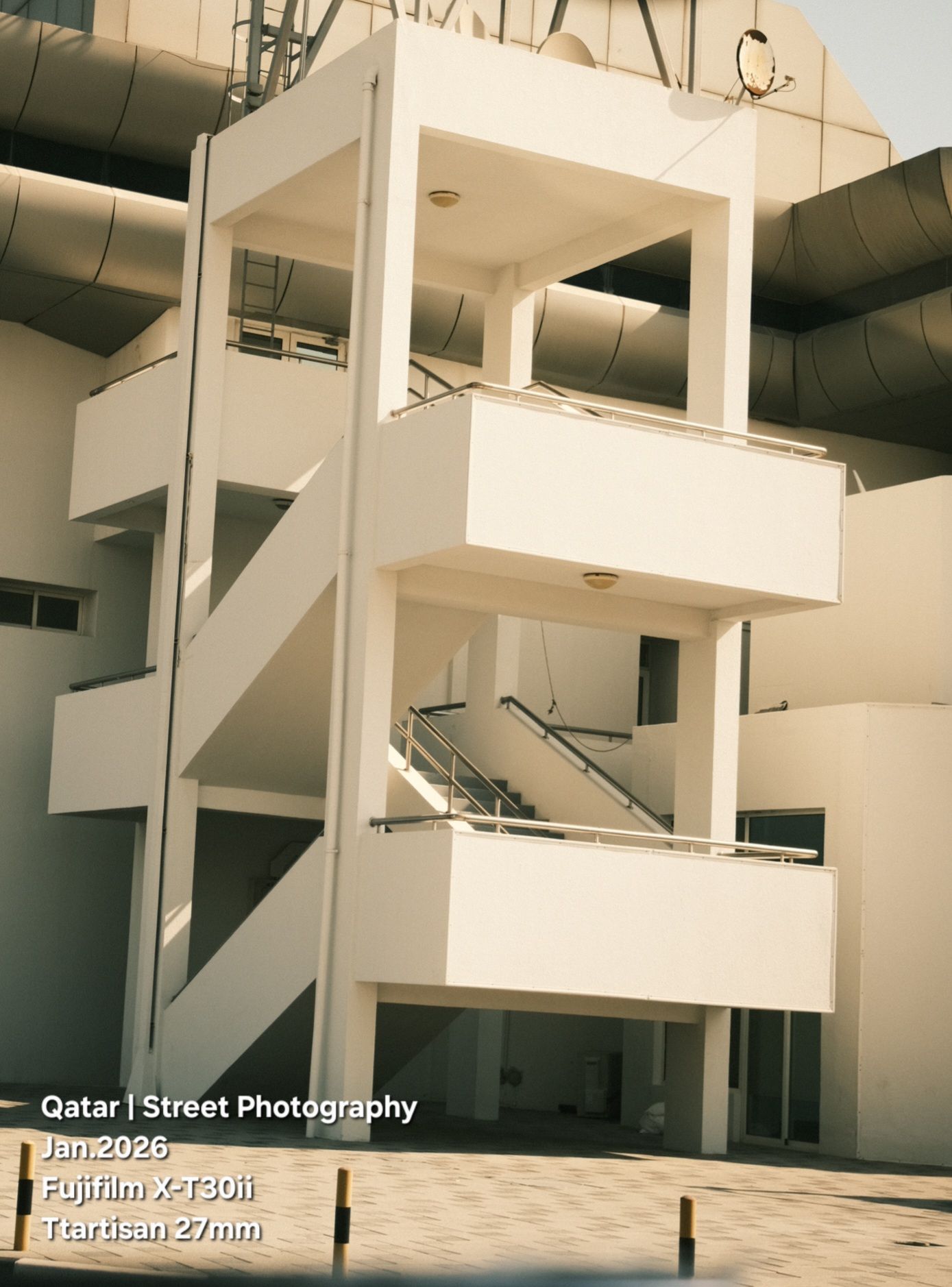
I take this photo in a sports club, I think these stairs take the audience to the cheer zone.
I was trying my new film sinmulation recipe “Classic Neg. Peachy ”
Other settings: ISO 160 , S.S. 1/833s , F3.2
Check here all the photos I take using this film simulation.

Taking pictures is not my main daily practices, but when i start playing with my camera, i really enjoy my self.
Thanks for visiting my Space..


 Ali's Photography Space...